This year has been an incredible one for the DTE environmental team, driven by innovation and defined by measurable impact across our service territory. Their efforts have advanced wildlife protection, waste reduction, renewable energy and land management, creating a ripple effect of sustainability that benefits our environment and our communities.
Prairie restoration work: Across both Fermi and Monroe, their prairie restoration work is creating and enhancing large expanses of habitat that support wildlife along the Detroit River and Western Lake Erie, one of the most important migratory bird corridors in North America. At Fermi, the Coastal Prairie and nearby upland and wetland habitats now serve as vital stopover areas for millions of migrating birds. They also offer a more sustainable approach to maintaining transmission rights‑of‑way and create new viewing opportunities for deer and raptors.
At Monroe, newly established and expanding prairie and wetland areas are helping rebuild habitat that have largely disappeared across Michigan, creating an oasis for birds, reptiles, amphibians and mammals in a region where two major migratory pathways converge. Together, the prairie projects at both sites are restoring rare ecosystems, strengthening biodiversity, and ensuring that wildlife has safe, thriving habitat for years to come.

Bald eagle protection: The bald eagle monitoring program once again demonstrated the importance of DTE’s protected prairie and wetlands, supporting breeding pairs, migrating eagles and more than 100 overwintering birds. The Monroe plant’s warm‑water discharge canal, which remains ice‑free in winter, provides a safe and reliable feeding area as an invaluable resource for a species that once neared extinction. Thanks to careful habitat management and reduced disturbance, numerous eaglets have also successfully fledged on site.

Peregrine falcon project: Monroe celebrated another successful year of its peregrine falcon nesting project, which has supported nesting falcons since 1997. Specially designed nest boxes, protective netting and a rescue‑and‑rehabilitation protocol ensure that chicks have the best possible chance of survival. Even if a fledgling takes a premature leap, the safety net below prevents injury and allows the parents to continue caring for their young.
Healthy habitats: Along the Lake Erie shoreline, teams enhanced habitat by planting native trees, grasses and wildflowers and by maintaining dedicated nesting areas for ring‑billed and herring gulls. Man‑made brush piles created from on‑site wood provide additional shelter for wildlife. Annual shoreline cleanups led by DTE summer students help keep beaches free of pollution and protect the health of the lake and its nesting species. The team also began a major effort to remove 100-150 acres of invasive phragmites to protect and restore these unique ecosystems.
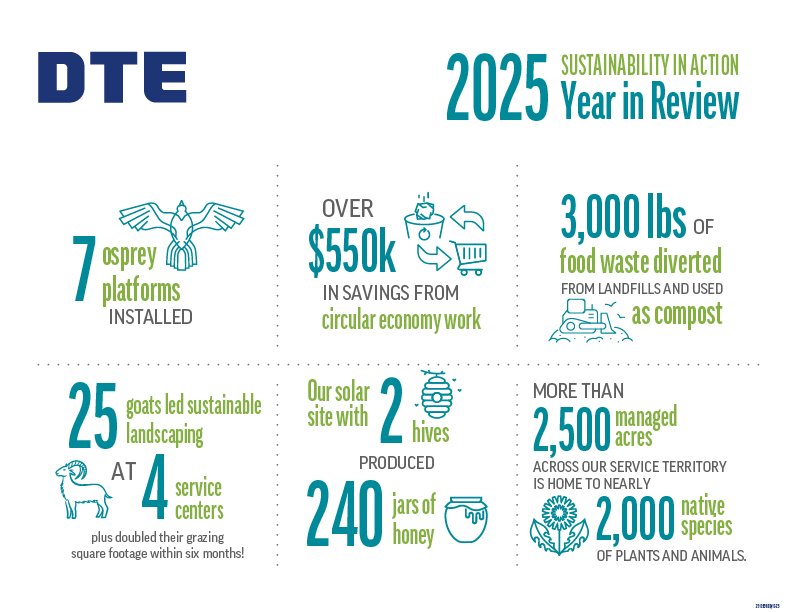
Altogether, the team managed more than 2,500 acres across our service territory – land and water that is home to nearly 2,000 native species of plants and animals. These site‑based achievements are part of a much larger commitment to conservation across DTE. This year, the company reached 30 Wildlife Habitat Council-certified facilities. This milestone reflects years of consistent stewardship and an ongoing commitment to managing land in ways that benefit biodiversity and local communities. WHC‑certified programs span 47 U.S. states and 19 countries, placing DTE’s work within a global network of organizations dedicated to meaningful, measurable conservation.

Sustainability at work: results that go the extra mile
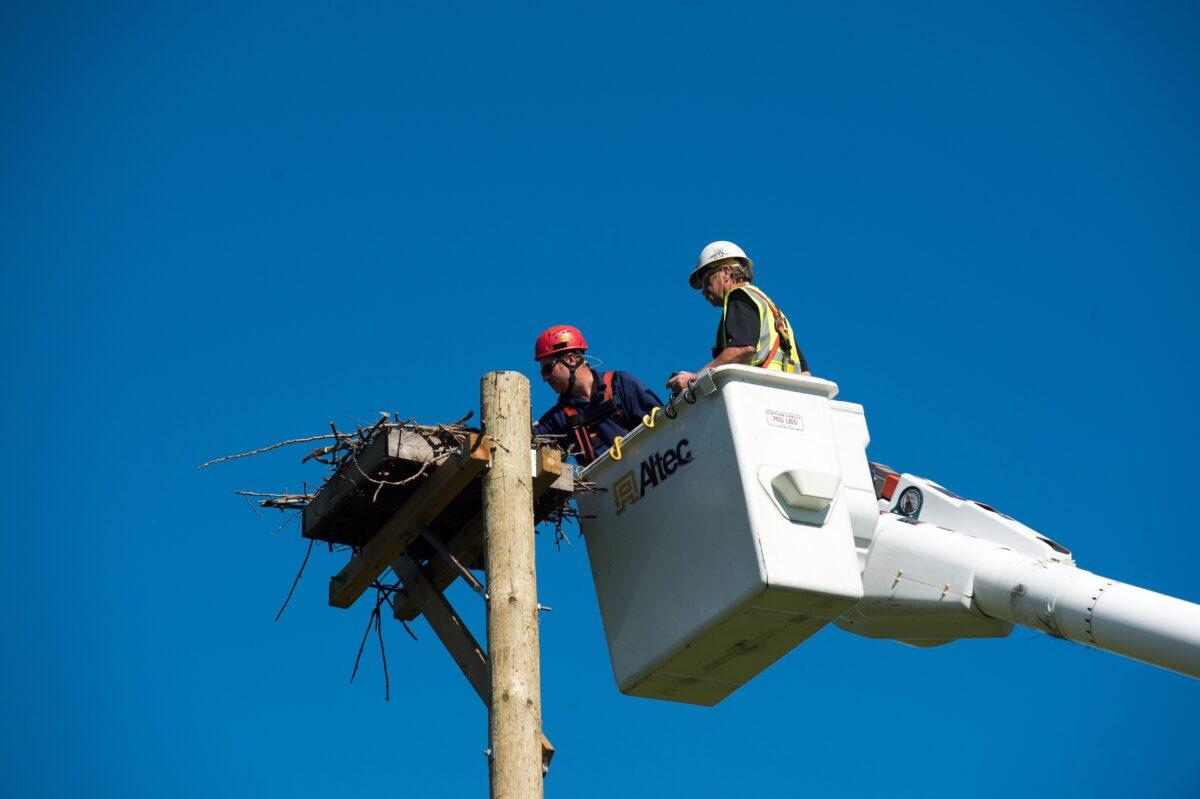
The Environmental team continued to deliver impressive results beyond wildlife habitats. To protect local bird populations, the team successfully installed seven osprey platforms across service territories. These platforms provide safe alternatives to power poles that reduce risks for both birds and the infrastructure.
The team’s commitment to advancing the circular economy also paid off in a big way, generating over $550,000 in savings, while reducing environmental impact. Food waste reduction was another area of success, with more than 3,000 pounds of organic material diverted from landfills and turned into nutrient‑rich compost.
Together with DTE’s Facilities department, Environmental introduced the DTE headquarters to Oscar, an AI‑powered assistant that helps employees sort waste correctly, turning everyday disposal decisions into opportunities for sustainability.
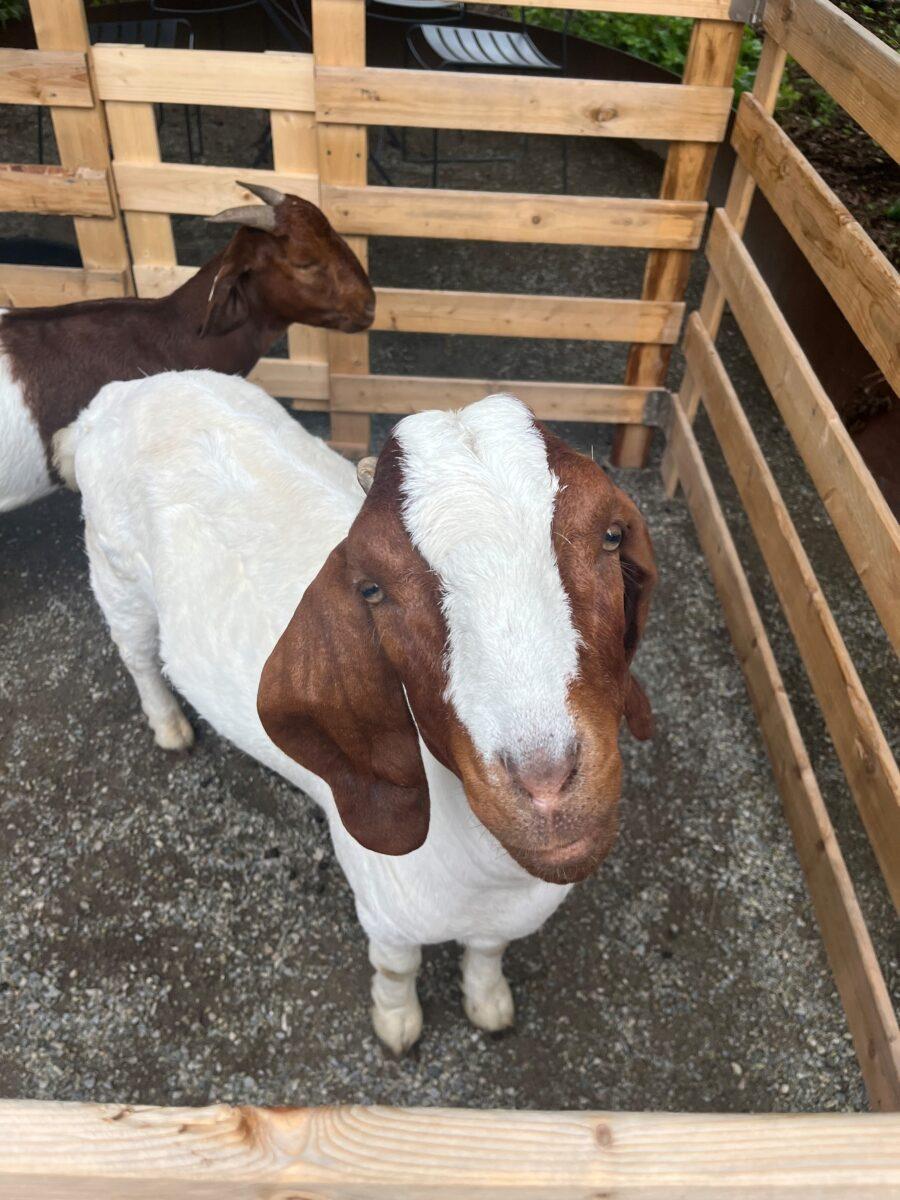
Landscaping took on a creative twist this year with the introduction of 25 goats at four service centers. Within just six months, these natural landscapers doubled their grazing square footage, offering an eco‑friendly alternative to traditional maintenance methods. And who could forget DTE’s newly named goat‑friend, Vincent Van Goat.
At the O’Shea Solar Park, sustainability and pollinator support came together as two beehives produced 240 jars of honey, showcasing how renewable energy projects can also nurture ecological balance.
These achievements are more than numbers on a page; they reflect the Environmental team’s vision to build more sustainable communities. By combining creativity with responsibility, the team has shown how local actions can generate major impact. Their work in the past year demonstrated continued progress in protecting nature and wildlife, reducing waste and integrating innovative nature‑based solutions into everyday work and projects.