
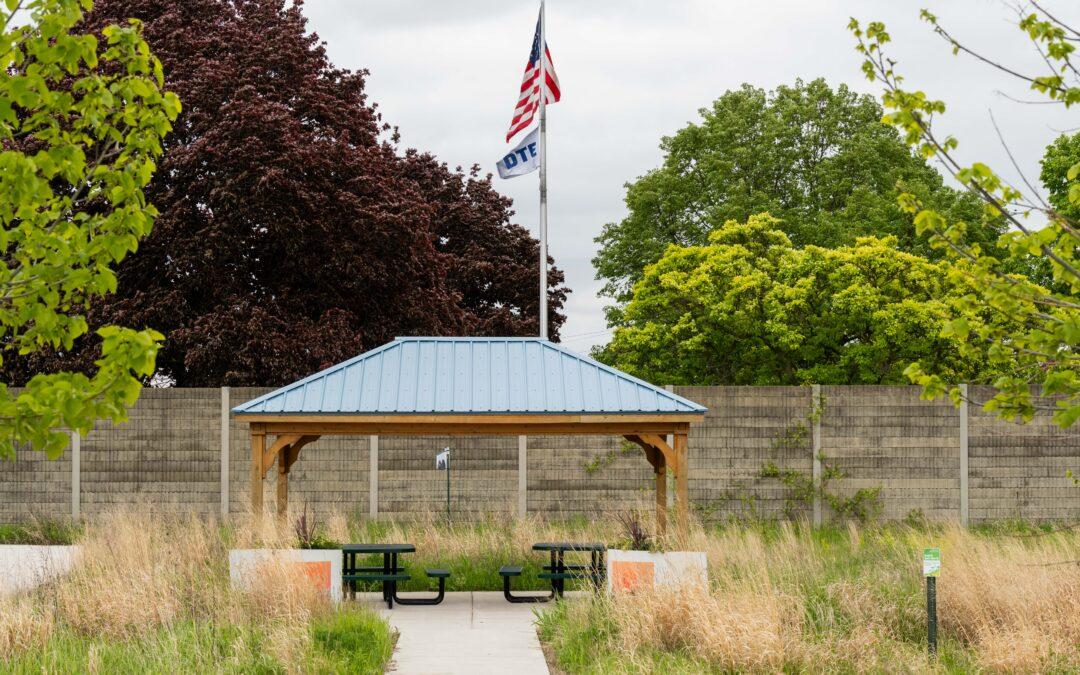
What happens to a wind turbine blade when it reaches the end of its useful life? At DTE’s Warren Service Center (WSC), the answer is creativity, craftsmanship and collaboration.
The idea grew from a broader effort to explore how retired blade materials could be reused in practical, visible ways. Tom Grant, principal engineer, Bob Dombrowski, shop machinist-mechanic lead and Rick Kile, construction specialist at WSC, brought that vision to life – transforming a retired wind turbine blade into flower planters that give the material a second life and create a visible symbol of sustainability.
That’s where Collin O’Shaughnessy, supervisor in environmental sustainability, came in. His ongoing research into wind turbine blade recycling and repurposing helped shape the approach.
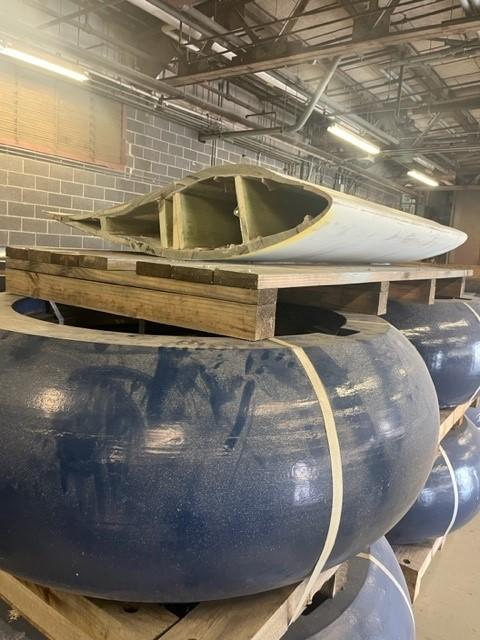 “Tom let me know he had a small portion of a blade, so I felt the need to do something with it,” said Collin. “We piloted an upcycling approach by cutting smaller blades in half and converting them into planter boxes to create a scalable, visible sustainability solution and kick-start broader reuse initiatives.”
From the beginning, the team had a clear objective: reuse a large, durable renewable energy component in a way that was safe, functional and visually impactful, while highlighting our company’s commitment to environmental stewardship.
“WSC shops have always supported environmental projects to reduce waste and reuse materials whenever possible,” said Tom. “This project offered a great opportunity to reuse materials that would have otherwise been wasted in a landfill by repurposing the wind turbine blades into flower planters.”
However, turning that idea into reality came with challenges. Wind turbine blades are not easy to work with – their size, shape and composite materials make them difficult to cut using conventional tools. After evaluating different approaches, the WSC shops team identified the most effective solution: use their waterjet cutting system located in the sheet metal shop to cut the blades.
This approach allowed the team to make clean, precise cuts while avoiding jagged edges that could pose safety risks. Each cut was carefully planned to ensure the finished planter would sit level and remain stable once installed.
Once the blade was cut and shaped, the team focused on the planter’s interior. Rather than filling the entire blade with soil, they built a “false bottom” inside the planter. This heavy plastic sheet with drainage holes keeps water moving through the planter, while foam seals the edges to keep the structure secure and durable over time.
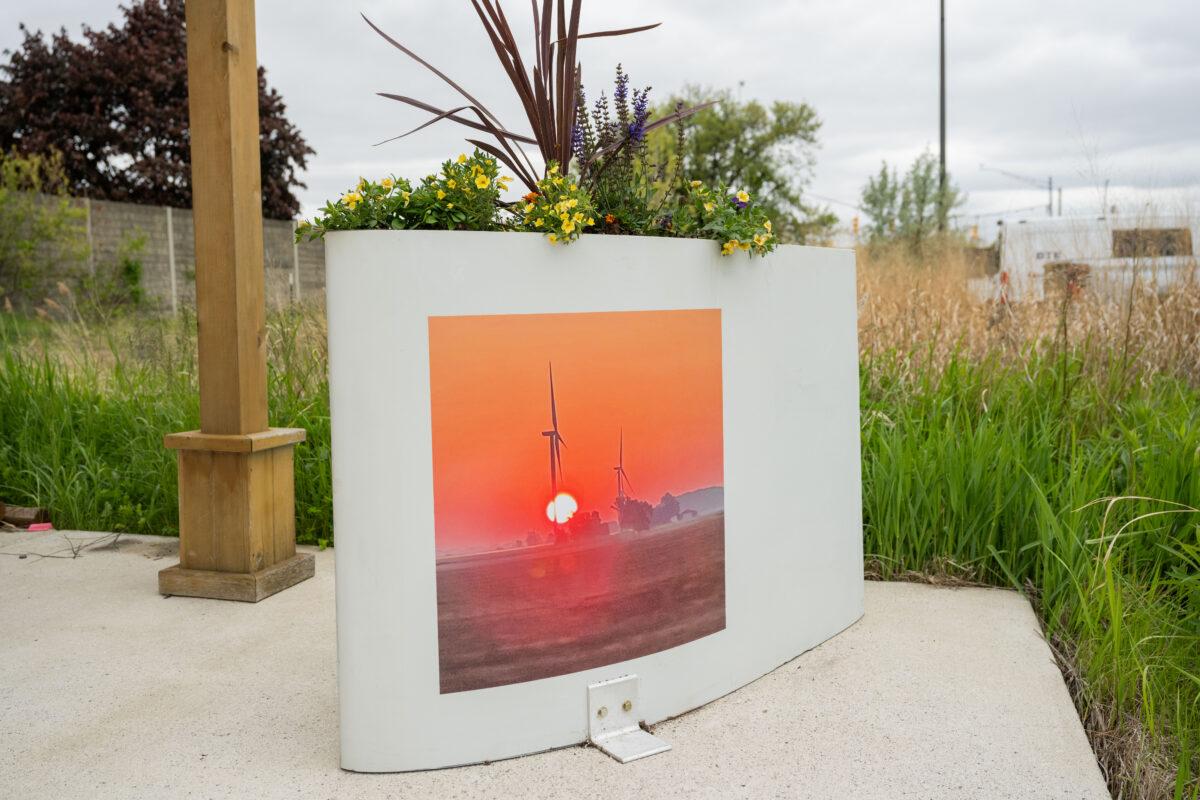 To help tell the story of where the material came from, the first planters were finished with an image of a wind turbine park. It’s a subtle but powerful reminder that these planters once played a role in generating renewable energy.
With the structures complete, the final step was bringing the planters to life. DTE’s environmental team added soil and planted flowers at WSC, turning the finished pieces into a visible example of innovation in action.
Today, the wind turbine blade planters stand as a reminder that sustainability does not stop when equipment reaches the end of its original purpose. With the right expertise and mindset, materials can be reimagined in ways that benefit people and the environment.